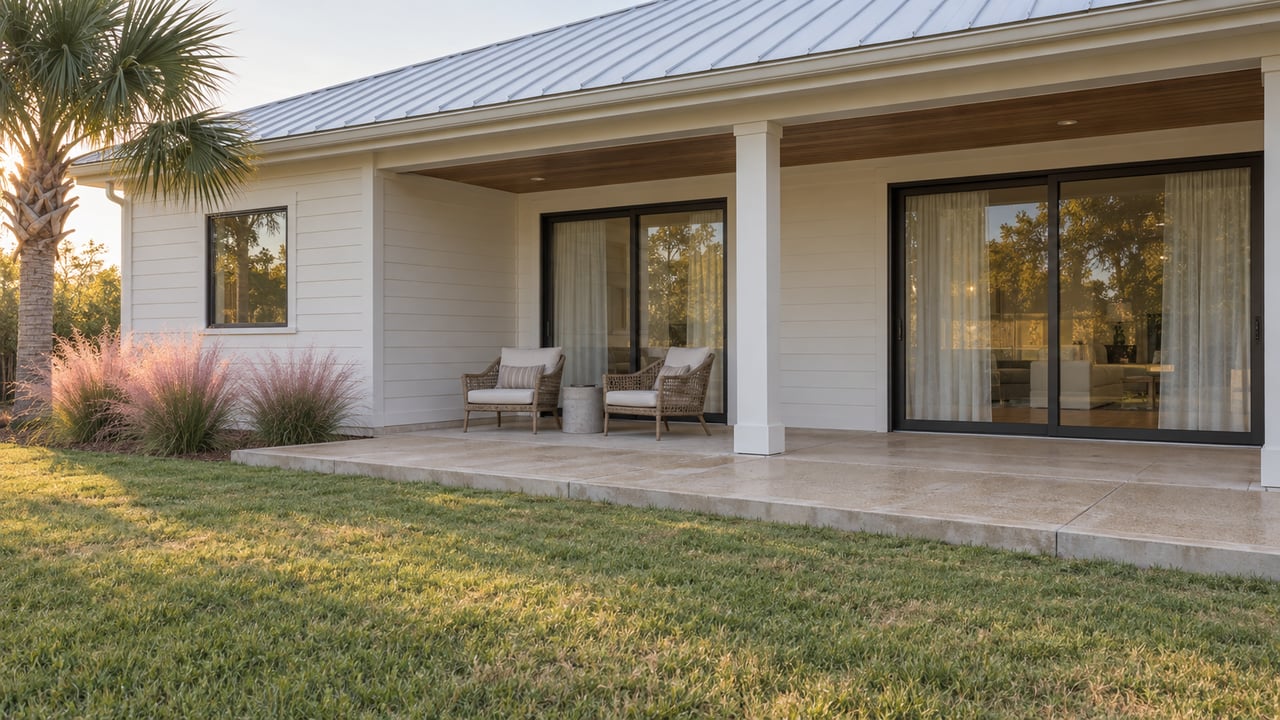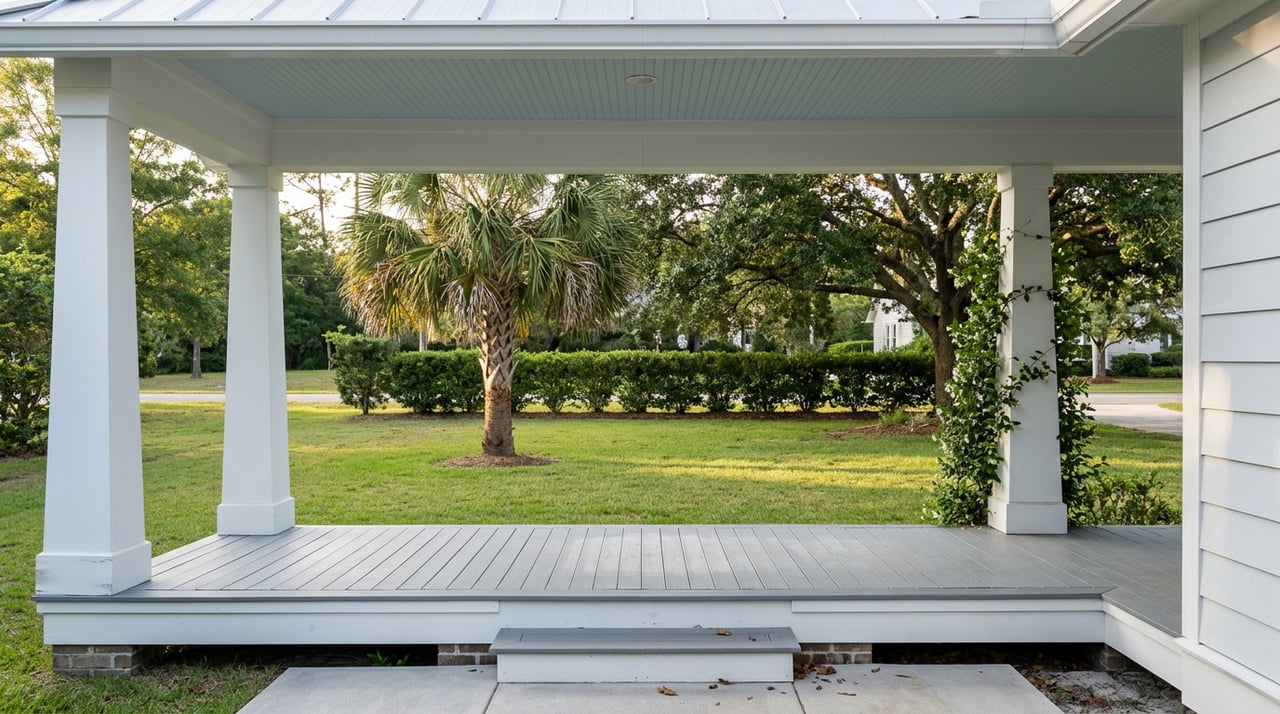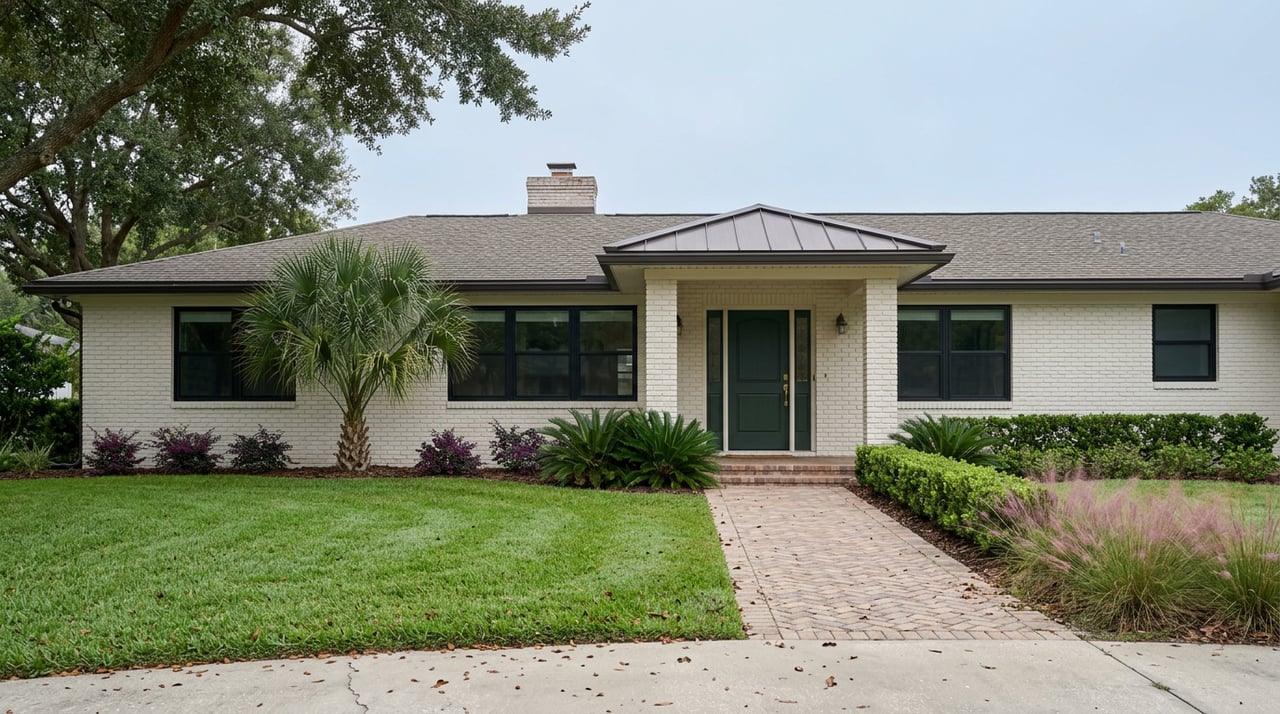
Across Walton County right now, a lot of contracts are stalling in the same place. Not at the appraisal. Not at the inspection. At the moment a buyer calls their insurance agent for the first real number and the answer lands nothing like what a quick online search suggested it would. On 30A, that call can turn a $1.8 million dream into a monthly payment nobody budgeted for. In Freeport, the same call often comes back reassuringly close to what a buyer expected. In DeFuniak Springs, it barely moves the needle at all.
That gap is the story. Not the county's headline median price, which sat at $748,000 over the three months ending May 2026, up 27.8 percent from the same stretch a year earlier. That number is real, but almost nobody in Walton County is actually shopping it. They're shopping one of three very different markets, and the line that separates them isn't the sale price anymore. It's the insurance line, and it's moving faster than the price line is.
The Median Is Real. It's Also the Wrong Number to Anchor On.
Walton County's price spread is already wide enough to make a countywide median close to meaningless on its own. Inlet Beach carries a median listing price near $1.795 million, the priciest submarket in the county. DeFuniak Springs sits at the other end, with an average home value around $227,000 as of this spring, per Zillow's tracking, though other listing data puts area prices closer to $250,000. Freeport falls somewhere in between, and it has been one of the fastest-growing cities in the county over the past decade.
Most write-ups on Walton County stop there, treat the price spread as the whole explanation, and move on to a list of towns. That's the surface. The number that actually decides whether a specific buyer can afford a specific address hasn't shown up yet, and it isn't the sale price at all.
What's Actually Splitting the Market: The Insurance Line
Florida's state-backed insurer of last resort, Citizens Property Insurance, has been pulling out of Walton County at a pace that's changed the math for anyone shopping the coast. Citizens' own county-level reporting shows personal residential policies in force here fell from 3,246 (representing $1.31 billion in exposure) at the end of 2024 to just 1,419 policies ($591 million in exposure) by June 30, 2026. That's a drop of roughly 56 percent in a year and a half, part of a statewide retreat that saw Citizens shrink even faster overall, from 936,182 policies to 278,246 over the same window. Of the Citizens policies that remain in Walton County, close to three out of every four are coastal wind-only, meaning the homeowner still has to piece together the rest of their coverage on the open market.
What that means in practice: a home that might have shown up in an old listing with a modest, subsidized Citizens premium now needs a private policy priced on current coastal risk. Walton County's typical inland home runs somewhere in the $2,400 to $4,000 range for annual coverage. A 30A Gulf-front property, by contrast, commonly runs $10,000 to $20,000 or more once wind and flood are both accounted for. That's not a rounding difference. It's the kind of number that changes whether a buyer's monthly payment pencils out at all, and it has nothing to do with the sale price printed on the listing.
There's a small piece of good news layered in. Citizens filed an average statewide rate cut of about 8.7 percent for 2026, its first decrease since 2015, and several private carriers have followed with reductions of their own as competition returns to the state. That's a stabilizing signal, not a reversal. Coastal Walton County remains the most expensive corner of the county to insure by a wide margin, and buyers comparing submarkets need to price that in before they price anything else.
| Submarket | What buyers are comparing | Typical annual insurance (wind + flood) |
|---|---|---|
| 30A / Gulf-front, e.g. Inlet Beach | Median listing near $1.8 million | Roughly $10,000 to $20,000+, often private wind-only coverage since Citizens has largely exited |
| Freeport | New construction, one of the county's fastest-growing cities | Bay-facing rather than Gulf-facing, generally closer to the county baseline of $2,400 to $4,000 |
| DeFuniak Springs | Average home value near $227,000 | Also near the county baseline, though older housing stock can affect wind mitigation credits |
The CBRA Wrinkle Nobody Explains Until You're Under Contract
There's a second layer that catches out-of-state buyers off guard on the eastern edge of 30A. Under the federal Coastal Barrier Resources Act, structures built or substantially improved on or after October 1, 1983 within a designated Coastal Barrier Resources System unit are barred from buying flood coverage through the National Flood Insurance Program at all. Walton County has mapped CBRA areas along its barrier coast, and a home inside one of them has exactly one option for flood coverage: the private market.
This isn't a hypothetical for a handful of parcels. It's a real constraint on some of the most desirable, highest-priced lots in the county, and it means the flood insurance conversation on those addresses starts from a completely different set of carriers and price points than a standard NFIP quote would suggest. Anyone writing an offer on undeveloped or recently rebuilt Gulf-front land should confirm CBRA status before assuming a federal flood policy is even available.
Freeport Is Absorbing the Buyers 30A's Insurance Bill Is Pricing Out
The insurance math on the coast is a big part of why Freeport has become the release valve for Walton County buyers who want proximity to the water without the beachfront premium. The city has been adding infrastructure to match. A $6 million wastewater project along the Highway 331 South corridor has been underway as part of an interlocal agreement with the county, alongside new turn lanes and traffic signals meant to keep pace with growth. A new middle school opened in 2024, and in April 2026 the Walton County school board approved a new athletic complex for Freeport High School. Earlier this year, a state-of-the-art community center was on track for completion sometime in 2026, and a public art initiative called Anchored in Freeport has been adding civic identity to a city that was a quiet crossroads not long ago.
As of late 2025, the city's planning pipeline showed hundreds of single-family lots moving through approval in neighborhoods like Owls Head Farms and Magnolia at the Bluffs, alongside multifamily projects including Bishop's Landing Apartments and The Oaks at Freeport. A larger concept called King's Crossing North has been proposed to blend single-family and nearly 1,000 multifamily units. Communities like Hammock Bay have already brought planned-community living with bay access to a part of the county that used to be mostly pass-through traffic on the way to the beach.
None of that changes the flood zone math on any individual parcel, but it does explain where buyers are landing when the 30A insurance number doesn't work for their budget. Freeport sits along Choctawhatchee Bay rather than directly on the Gulf, and that inland-facing geography is generally a gentler flood insurance conversation than a first-tier 30A lot, even though every property still needs its own quote.
What This Means If You're Comparing Neighborhoods Right Now
Get an insurance quote on the specific address before you get attached to the house, not after you're under contract. A generic Walton County estimate tells you almost nothing about what a particular parcel will cost to insure, because the range between submarkets is too wide for an average to be useful. Ask directly whether the property sits in a mapped CBRA zone if you're looking anywhere near the barrier coast. If a Citizens takeout or assumption letter shows up during your transaction, compare the assuming carrier's terms against the open market before you accept it, since the private market is actively writing business in this county and sometimes beats what Citizens offers.
FAQ
Does flood insurance transfer to a new owner when a home in Walton County sells? No. Flood policies don't transfer with the deed. A buyer needs to secure their own flood coverage, and pricing is based on the individual property's elevation, flood zone, and rebuild cost rather than the previous owner's rate.
Is Citizens Property Insurance still an option for coastal Walton County homes? In some cases, yes, though the pool has shrunk sharply and most remaining Citizens policies here are wind-only, meaning the rest of the coverage still needs to be placed with a private carrier.
If my lender doesn't require flood insurance, do I still need it? It's optional in lower-risk zones, but a meaningful share of flood claims nationally come from homes outside the high-risk zones. On a coastal county like Walton, most local agents recommend carrying it regardless of whether the lender mandates it.
Insurance math like this is exactly where a construction background earns its keep, because a roof's age, a home's wind mitigation features, and its actual flood zone placement all move the number more than the listing price does. If you're comparing Walton County submarkets and want someone who can look at a property through that lens before you write an offer, Johnnette Acree is glad to walk through it with you. Let's Connect.